
AI in 2030: How Future Technology Will Change Everyday Life
By Dev Sagar • 2026-02-08 01:14:11
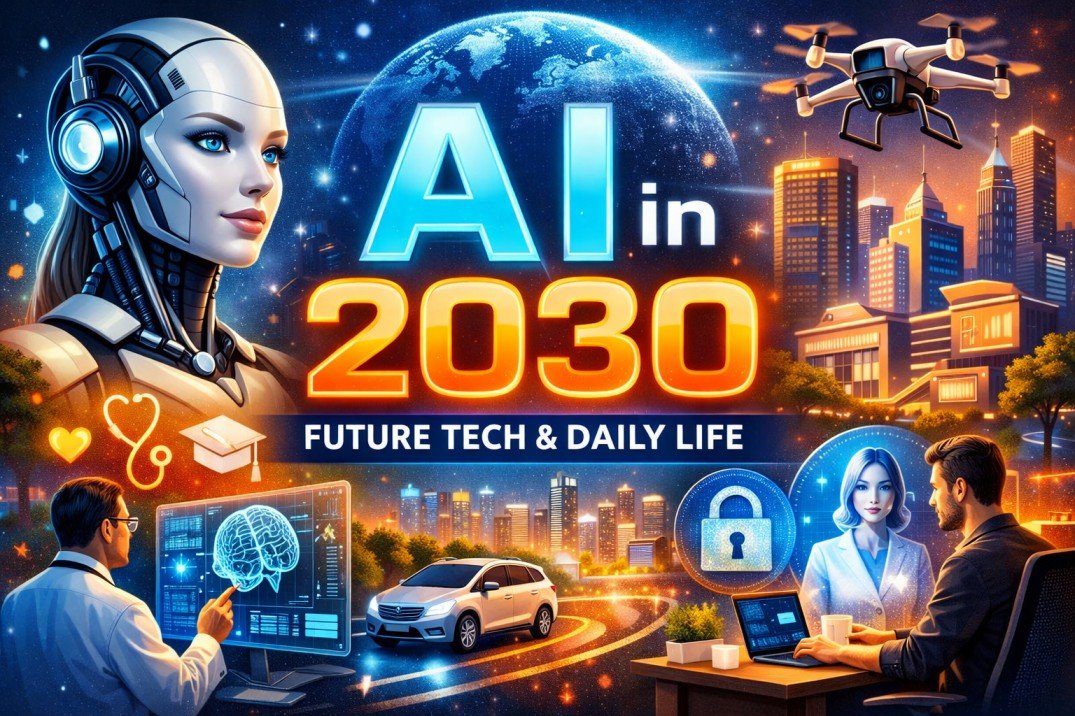
Artificial Intelligence (AI) is already everywhere — from mobile cameras and search engines to chatbots and recommendation systems. But the real change is coming in the next few years. By 2030, AI may become as normal as electricity in our lives. It will not just help people; it will also automate decisions, improve services, and create new types of jobs.
Quick answer: AI in 2030 will make daily life faster and smarter — with AI doctors, AI teachers, smarter cities, and safer digital systems.1) AI-Powered Healthcare: Faster Diagnosis, Better Treatment
In 2030, AI may help hospitals detect diseases earlier and with higher accuracy. AI can analyze medical scans, reports, and symptoms in seconds. This can reduce human error and help doctors save more lives.
- AI tools may detect cancer and heart problems earlier
- Personalized treatment plans based on your health data
- AI assistants for hospitals to manage patient records
2) AI in Education: Personalized Learning for Every Student
Many students struggle because teaching is not customized. Future AI education systems may create a learning plan for each student. This means students can learn faster, with less stress.
- AI tutors that explain topics in simple language
- Instant doubt solving, practice tests, and feedback
- Teachers using AI to track student progress
3) AI Jobs in 2030: New Opportunities + New Challenges
AI will automate some tasks, but it will also create new jobs. The key is to learn skills that work with AI instead of fighting it.
- New roles: AI trainer, AI content editor, automation manager
- More demand for cybersecurity and data privacy experts
- People with digital skills will grow faster in career
4) Smart Cities: Traffic, Electricity, Water — Everything Automated
Smart cities are already starting, but by 2030 they may become common. AI can control traffic lights, detect road problems, manage electricity usage, and even reduce pollution through better planning.
- AI traffic systems can reduce jams and accidents
- Smart electricity grids to save power
- Better waste management and water supply planning
5) AI Security: Safer Payments, Better Fraud Detection
With more online payments and digital identity, fraud is also rising. AI can detect unusual activity and block fraud quickly. Banks and payment apps already use AI, but future systems may become much stronger.
- AI detecting fake calls, phishing, and scam patterns
- Faster payment verification and risk scoring
- More secure login methods using face/voice analysis
6) “Digital Humans” and AI Assistants for Everyone
In 2030, AI assistants may behave like real humans — understanding emotions, speaking naturally, and helping you plan your day. Some companies are also working on “digital humans” — virtual presenters or support agents that look and talk like real people.
- AI customer support that feels human
- AI for meetings: summaries, action items, reminders
- AI for content: scripts, posts, and marketing plans
Big Question: Is AI in 2030 Safe?
AI can be powerful, but safety depends on how it is used. Governments and companies will need stronger rules for privacy, bias control, and responsible AI usage.
Conclusion
AI in 2030 will likely change healthcare, education, jobs, city life, and digital security. If you learn AI-friendly skills and stay updated, the future can be a big opportunity.